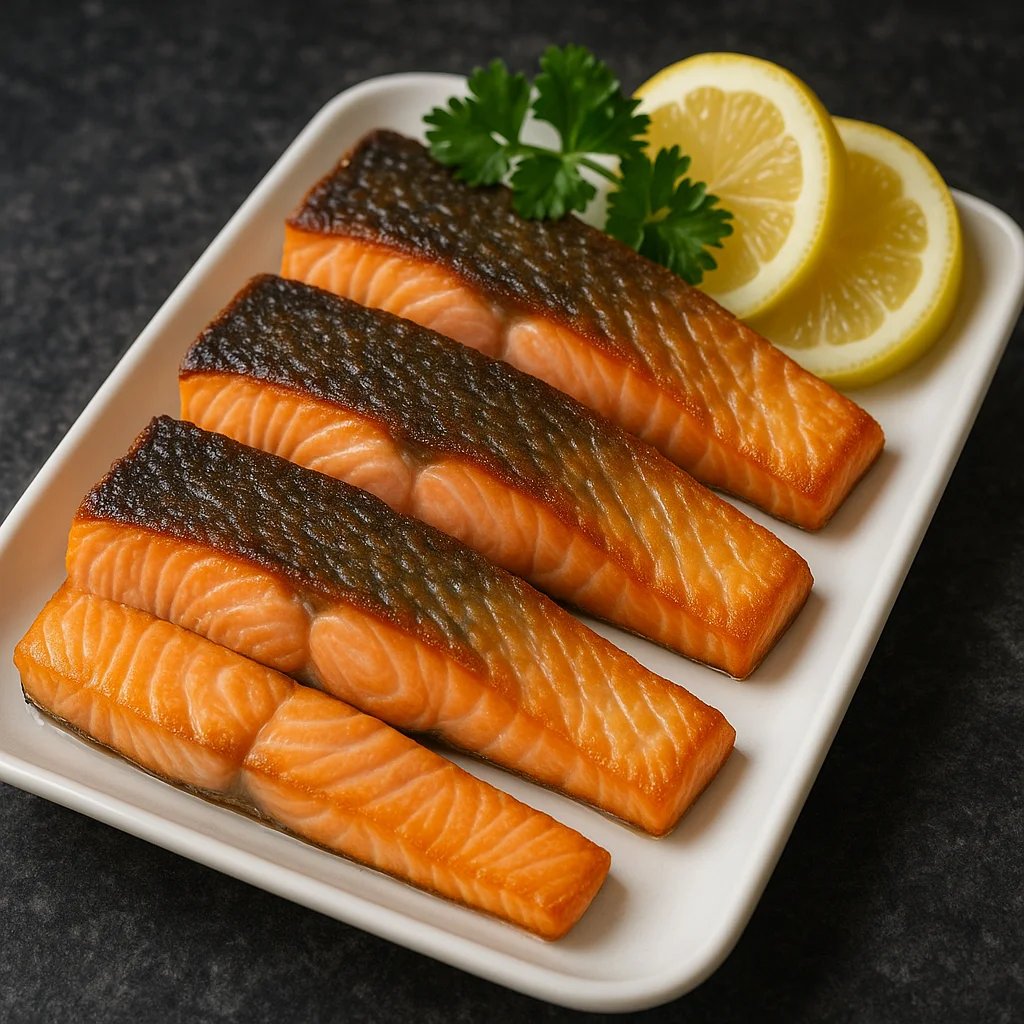
The Ultimate Guide to Air Fryer Salmon: Crispy Skin Every Time
Category: Cooking Tips
Master crisp, glassy salmon skin without overcooking the fillet. This guide covers prep, timing, temperatures, and diabetic-friendly flavor ideas so you can enjoy low-carb salmon that supports steady blood sugar.
The Ultimate Guide to Air Fryer Salmon: Crispy Skin Every Time
The airflow, dry brine, and light-oil technique that makes air fryer chicken wings crackly also works for salmon. Salmon's protein and healthy fats help satisfy hunger and can support steady blood sugar. Use this step-by-step plan tonight.
Why salmon is a smart low-carb staple
Salmon delivers complete protein and omega-3 fats that help you feel full, which can make it easier to keep carbs in check. That combination often means fewer blood sugar spikes after meals. If you are building a weekly plan, see our overview of what makes a recipe diabetic-friendly for more guidance on portioning fats, protein, and nonstarchy vegetables: [diabetic-friendly info](/learn/what-makes-recipe-diabetic-friendly).
The crispy-skin blueprint
Follow these steps for consistent results.
1. Choose the right cut
- Use skin-on fillets about 1 inch thick, preferably center-cut for even cooking.
- Pin-bone if needed. Pull bones with tweezers so the flesh lies flat.
2. Dry brine for 20 to 45 minutes
- Pat the fish very dry with paper towels. Season both sides with kosher salt, about 1 half teaspoon per pound, then adjust to taste.
- Set the fillets skin side up on a rack in the fridge, uncovered. This pulls moisture from the skin for better blistering.
3. Optional micro-dusting
- Lightly brush the skin with oil, then dust the skin with a tiny pinch of baking powder or arrowroot. Use less than 1 eighth teaspoon per fillet. This is optional, but it boosts crisping by wicking surface moisture.
4. Preheat the air fryer
- Heat the fryer for 3 to 5 minutes at 400 degrees Fahrenheit. A hot basket helps render fat under the skin quickly.
5. Arrange for airflow
- Place fillets skin side up on a cleaned, lightly oiled basket or on perforated parchment. Avoid solid parchment that blocks airflow. If your unit has stackable racks, use the top rack to keep the skin close to circulating heat and space fillets so they do not touch.
6. Cook to USDA-safe doneness
- Air fry at 400 degrees Fahrenheit until the thickest part reaches 145 degrees Fahrenheit, measured with an instant-read thermometer. This is the USDA minimum for fish and shellfish. For a 6 to 8 ounce, 1 inch thick fillet, this usually takes 7 to 10 minutes. Start checking at 6 minutes to avoid overshooting.
7. Serving
- Fish does not require a rest period. Serve right away while the skin is still crisp.
Pro tip: If you want a glaze, brush it on during the final 1 to 2 minutes of cooking so it sets without steaming the skin. Choose no-added-sugar options to keep carbs low.
Flavor without the sugar spike
You do not need honey or syrups to make salmon memorable. Try one of these quick mixes, then pat the skin dry again before cooking.
- Lemon garlic: Olive oil, lemon zest, minced garlic, cracked pepper, sea salt.
- Smoky dill: Dijon, dill, smoked paprika, olive oil, lemon juice.
- Chili lime: Chili powder, lime zest and juice, avocado oil, a pinch of cumin.
For weeknight variety, batch a master marinade and adjust seasonings for different proteins. Make a larger batch, divide it immediately into separate containers, and use one for each protein to avoid cross-contamination. Use half for salmon and half for poultry or lean cuts, and skip sugars to keep it diabetic-friendly. If you are new to planning low-carb meals, our [pantry staples](/authority/pantry-staples) guide makes it easier to stock sauces and spices that support your goals.
Skin up or skin down
For the air fryer, cook skin side up. Direct contact with hot air dries and crisps the skin quickly. If you like a gentle crust on the flesh, flip for the final 1 to 2 minutes, but return skin side up before serving to preserve crackle.
Timing, thickness, and temperature
- Thin tail pieces under 0.75 inch can be done in 5 to 7 minutes. Start checking early.
- Thick center cuts near 1.25 inches can take 9 to 12 minutes. Keep the thermometer handy.
- Air fryers vary. Use our [temperature guide](/learn/air-fryer-temperature-guide) for general ranges. Remember that the safe internal temperature for fish is 145 degrees Fahrenheit.
Diabetic-friendly plate ideas
Round out your salmon with low-carb sides that offer fiber and micronutrients.
- Roasted asparagus or broccoli with lemon.
- Cabbage slaw with olive oil and apple cider vinegar.
- Cauliflower mash with chives.
- Quick cucumber salad with dill and unsweetened Greek yogurt.
These keep carbs modest while delivering volume and texture. For more ideas, browse our [seafood recipes](/recipes/category/seafood).
What if my skin is not crisp
- It steamed. Pat drier next time and give the skin a longer salt-dry.
- The fryer was cold. Preheat for at least 3 minutes.
- The basket was crowded. Leave space. Overlapping fillets trap moisture.
- The glaze went on too early. Brush it on near the end.
Cross-training your technique
The airflow and dry-brine approach works for other proteins too. Apply the same logic to a simple air fryer sirloin or boneless chicken. Remember USDA-safe minimums for other meats. Steaks and chops to 145 degrees Fahrenheit, then rest 3 minutes. Ground meats to 160 degrees Fahrenheit. Poultry to 165 degrees Fahrenheit.
Example salmon recipes to try next
- [Herb Crusted Air Fryer Pork Chops with Garlic Lemon Broccoli](/recipes/herb-crusted-air-fryer-pork-chops-with-garlic-lemon-broccoli)
- [Air Fryer Herb Crusted Pork Tenderloin with Parmesan Zucchini](/recipes/air-fryer-herb-crusted-pork-tenderloin-with-parmesan-zucchini)
- [Garlic Parmesan Shrimp and Broccoli Air Fryer Side](/recipes/garlic-parmesan-shrimp-and-broccoli-air-fryer-side)
Make-ahead, leftovers, and reheating
- Refrigerate cooked salmon for up to 3 days.
- Recrisp skin by reheating in the air fryer at 350 degrees Fahrenheit for 3 to 4 minutes. Avoid microwaving, which softens the skin.
- Flake leftovers into a leafy salad, egg scramble cooked to 160 degrees Fahrenheit, or lettuce wrap with avocado and herbs.
Blood sugar notes
Protein and healthy fats slow digestion, which can support steadier glucose responses. Track your post-meal numbers and adjust portions of fats and nonstarchy veggies as needed. For a deeper dive on patterns and timing, see our [blood sugar control guide](/authority/blood-sugar-control).
Frequently Asked Questions
Can I use one marinade for multiple proteins during the week?
Yes. Make a larger batch of a no-added-sugar marinade and divide it immediately into separate containers. Use one portion for salmon, one for poultry, and another for lean red meat. Do not reuse marinade that has touched raw proteins. For food safety, cook fish to 145 degrees Fahrenheit, poultry to 165 degrees Fahrenheit, and steaks or chops to 145 degrees Fahrenheit then rest 3 minutes.
Do I need to preheat the air fryer for salmon?
Preheating helps the skin render and crisp before the flesh overcooks. Aim for 3 to 5 minutes at 400 degrees Fahrenheit. Skipping this step is a common cause of rubbery skin.
Can I air fry salmon from frozen?
Yes. Do not rinse raw fish. If ice crystals are present, scrape them off with the dull edge of a knife or blot with a clean paper towel. Cook at 380 degrees Fahrenheit until the fillet reaches 145 degrees Fahrenheit, measured at the thickest part. For extra crisp skin, add 1 to 2 minutes at 400 degrees Fahrenheit at the end. Expect a few extra minutes compared to thawed fish.
What fats are better for heart health when cooking salmon?
Unsaturated fats like olive, avocado, and canola oils are generally more supportive of heart health than saturated fats. Salmon already contains healthy fats, so you only need a thin brush of oil on the skin to promote crisping without adding extra calories.
How long until I notice blood sugar improvements on a low-carb plan?
Some people see steadier readings within days, while others need a few weeks to fine-tune portions and timing. Track your meals and pair protein with nonstarchy vegetables. Share your log with your care team for personalized targets.
How long do air fryers typically last?
With regular cleaning and careful handling of the nonstick surfaces, many home units perform well for 2 to 5 years. Avoid metal utensils, do not overload the basket, and keep vents clear to preserve airflow and heating performance.
With a short dry brine, a hot preheated basket, and a quick check with a thermometer, you will get flaky salmon and crisp, glassy skin every time. That is low-effort cooking that tastes great and supports your goals.
Read the full article on Low Carb Air Fryer