Category: Equipment Reviews
Choosing the right air fryer and add-ons can make low-carb cooking easier, safer, and more delicious. Here are the tools I rely on, with practical tips for crisp results, accurate temperatures, and simple cleanup.
You will see a mix of gear to consider, plus simple tests you can run at home to confirm your setup is cooking evenly and hitting safe internal temperatures.
- Basket style: Compact, strong airflow, great for crisping. Ideal for single cooks or small families. Controls are straightforward and preheat is quick. - Oven style: Looks like a mini countertop oven, often includes trays and rotisserie features. Better for batch cooking or when you want to cook multiple items at once.
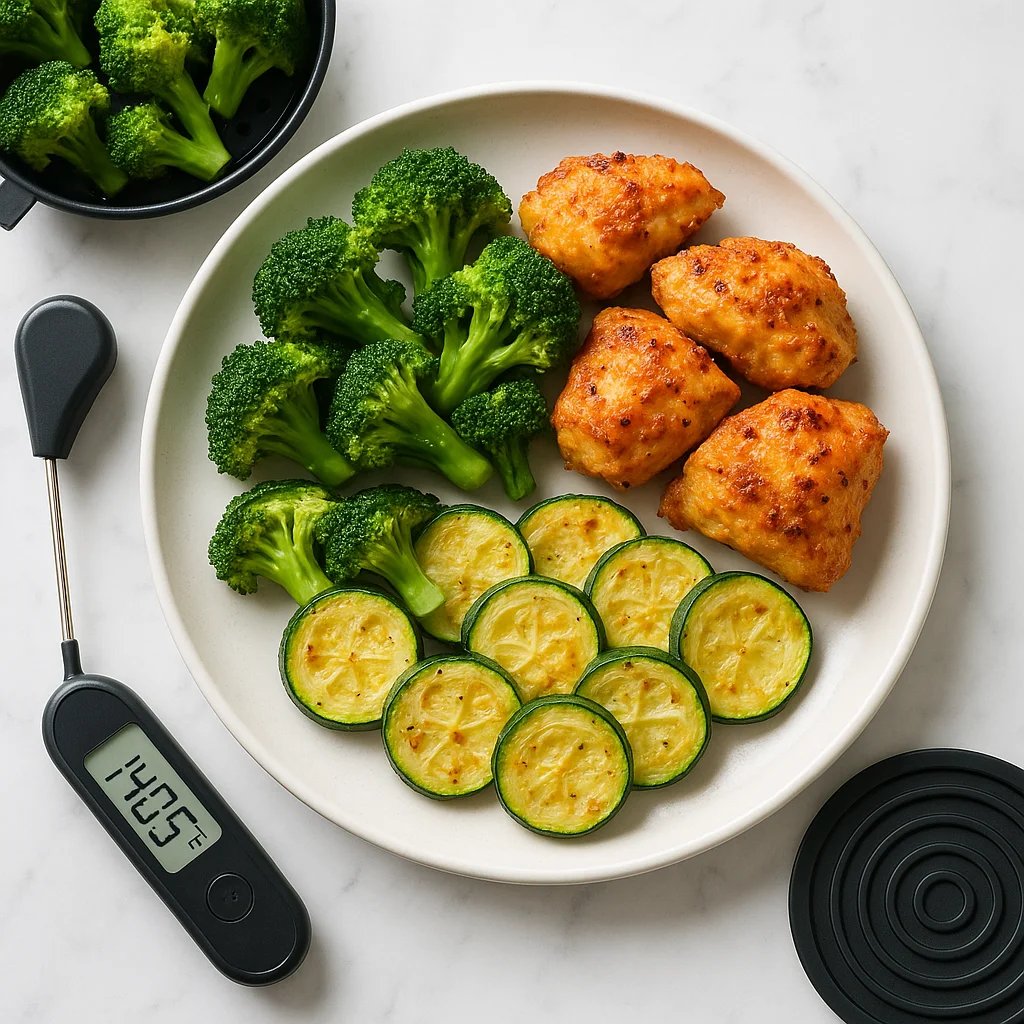
1. Capacity and footprint: A 4 to 6 quart basket suits most couples or small families. Big families or weekly meal preppers may prefer an 8 quart or an oven style with two racks. 2. Wattage and airflow: Higher wattage usually means faster crisping. Strong airflow reduces the need for flipping. 3. Temperature accuracy: Some models run hot. A reliable [digital food thermometer](https://rocktopgear.com/amazon) helps confirm your air fryer reaches USDA-safe internal temperatures. 4. Easy cleanup: Nonstick baskets, removable trays, and compatible [parchment liners](https://rocktopgear.com/amazon) make weeknight cleanup painless.
If you are upgrading, a well-reviewed [air fryer](https://rocktopgear.com/amazon) with a simple interface, consistent heat, and dishwasher-safe parts is worth the investment. Larger households often appreciate a [dual-basket air fryer](https://rocktopgear.com/amazon) for cooking a protein and a side at different temps.
USDA-safe internal minimums in Fahrenheit:
- Beef, lamb, pork steaks, chops, roasts: 145 degrees Fahrenheit, then let the meat rest for 3 minutes. - Ground meats: 160 degrees Fahrenheit. - Poultry: 165 degrees Fahrenheit. - Fish and shellfish: 145 degrees Fahrenheit. - Eggs: 160 degrees Fahrenheit, or until yolk and white are firm.
Tip: Check the thickest part of the food, avoiding bones. For chicken thighs and wings, aim for 165 degrees Fahrenheit. For salmon, aim for 145 degrees Fahrenheit and do not overcook the edges. For pork chops or steak, stop at 145 degrees Fahrenheit and rest 3 minutes before slicing for tender results.
- Use 1 to 2 sprays per side for meats or vegetables. This keeps macros predictable. - Stick to oils with a clean flavor. Olive oil for veggies, neutral oils for rubs when you do not want extra flavor. - Avoid propellant cans. A refillable sprayer is safer around heating elements and usually sprays more evenly.
- Parchment liners: Precut [parchment liners](https://rocktopgear.com/amazon) save time and reduce stuck-on bits. They are especially helpful with cheese crusts on low-carb zucchini fries. - Multi-layer racks: A [multi-layer rack](https://rocktopgear.com/amazon) helps you cook more food at once without crowding. More space means crisp results. - Silicone-tipped tongs: Gentle on nonstick surfaces and heat safe. Reliable [silicone tongs](https://rocktopgear.com/amazon) make turning food quick and precise.
Airflow is king in air frying. Do not pack food tight. Leave a little space around each piece and use racks to elevate where possible.
Try these recipes to see the gear in action: [Crispy Air Fryer Chicken Thighs](/recipes/air-fryer-lemon-garlic-chicken-thighs-with-parmesan-broccoli), [Keto Zucchini Fries](/recipes/air-fryer-herb-crusted-lamb-chops-with-zucchini-mushroom-medley), and [Garlic Parmesan Salmon Bites](/recipes/crispy-parmesan-herb-air-fryer-salmon).
1. Even browning test: - Toss green beans with a teaspoon of olive oil, salt, and pepper. Air fry at 375 degrees Fahrenheit for 8 to 10 minutes, shaking halfway. - Look for even color and crisp tips. If one corner consistently undercooks, rotate the basket mid-cook or reduce crowding.
2. Chicken safety test: - Season two chicken thighs and air fry at 380 degrees Fahrenheit until the thickest part reaches 165 degrees Fahrenheit. Confirm with your [digital food thermometer](https://rocktopgear.com/amazon). - If the skin crisped before the center hit 165, lower the set temperature by 10 degrees Fahrenheit next time and give it more minutes. Always keep the internal target at 165 degrees Fahrenheit.
3. Fish tenderness check: - Air fry salmon portions at 390 degrees Fahrenheit until they reach 145 degrees Fahrenheit. Check the center with a thermometer. The fish should flake but stay moist.
4. Steak precision: - Air fry a 1 inch steak. Pull at 145 degrees Fahrenheit, then rest 3 minutes before slicing. This confirms your air fryer can reach USDA-safe minimums while keeping meat juicy.
For ground beef patties, confirm 160 degrees Fahrenheit. For egg-based bites or frittatas, confirm 160 degrees Fahrenheit or cook until set.
If you are unsure where to start, grab chicken thighs for [Crispy Air Fryer Chicken Thighs](/recipes/air-fryer-lemon-garlic-chicken-thighs-with-parmesan-broccoli) and a side of [Keto Zucchini Fries](/recipes/air-fryer-herb-crusted-lamb-chops-with-zucchini-mushroom-medley). Confirm 165 degrees Fahrenheit for the chicken, let any pork or steak rest 3 minutes if you cook those later, and keep salmon at 145 degrees Fahrenheit for tender bites. The right equipment turns these checks into quick, confident habits that you will use every week.