Category: Nutrition
Intermittent fasting pairs naturally with keto style air fryer cooking for gentler post meal glucose and easier prep. Learn a simple schedule, what to eat when you break your fast, and how to batch cook protein forward meals with non starchy vegetables to support diabetes management.
Intermittent fasting is not a magic trick. It works best when your eating window is consistent, your meals are balanced for blood sugar, and your hydration is solid. If you use medication that lowers glucose, talk with your care team before changing meal timing. If you are pregnant or breastfeeding, under 18, have a history of an eating disorder, or have other medical conditions such as advanced kidney disease, do not start fasting without medical guidance. For a refresher on glucose basics, see our [blood sugar control guide](/authority/blood-sugar-control).
- 12:12 or 14:10. Finish dinner by 7 pm. Eat breakfast between 7 am and 9 am. Good for beginners and active schedules. - 16:8. Finish dinner by 7 pm. Break the fast at 11 am. Eat two meals and an optional snack within 8 hours.
During the fast, stick to water, unsweetened tea, or black coffee. Add a pinch of salt to water if you feel lightheaded. If your healthcare provider has advised you to limit sodium, skip added salt. When you break the fast, choose a protein forward plate and keep net carbs modest to limit rapid post meal glucose rise. If you take insulin or other glucose lowering medication, coordinate any schedule changes with your healthcare team so doses can be adjusted safely.
- Protein first. 25 to 45 grams from poultry, fish, eggs, or meat. The air fryer gives you crisp texture without breading. - Non starchy vegetables. 1 to 2 cups, cooked or raw. Dress with olive oil or butter for satisfaction. - Fat to taste. 1 to 2 tablespoons of olive oil, avocado oil, ghee, or butter. - Hydration. 12 to 16 ounces of water or broth alongside the meal.
Examples you can cook quickly:
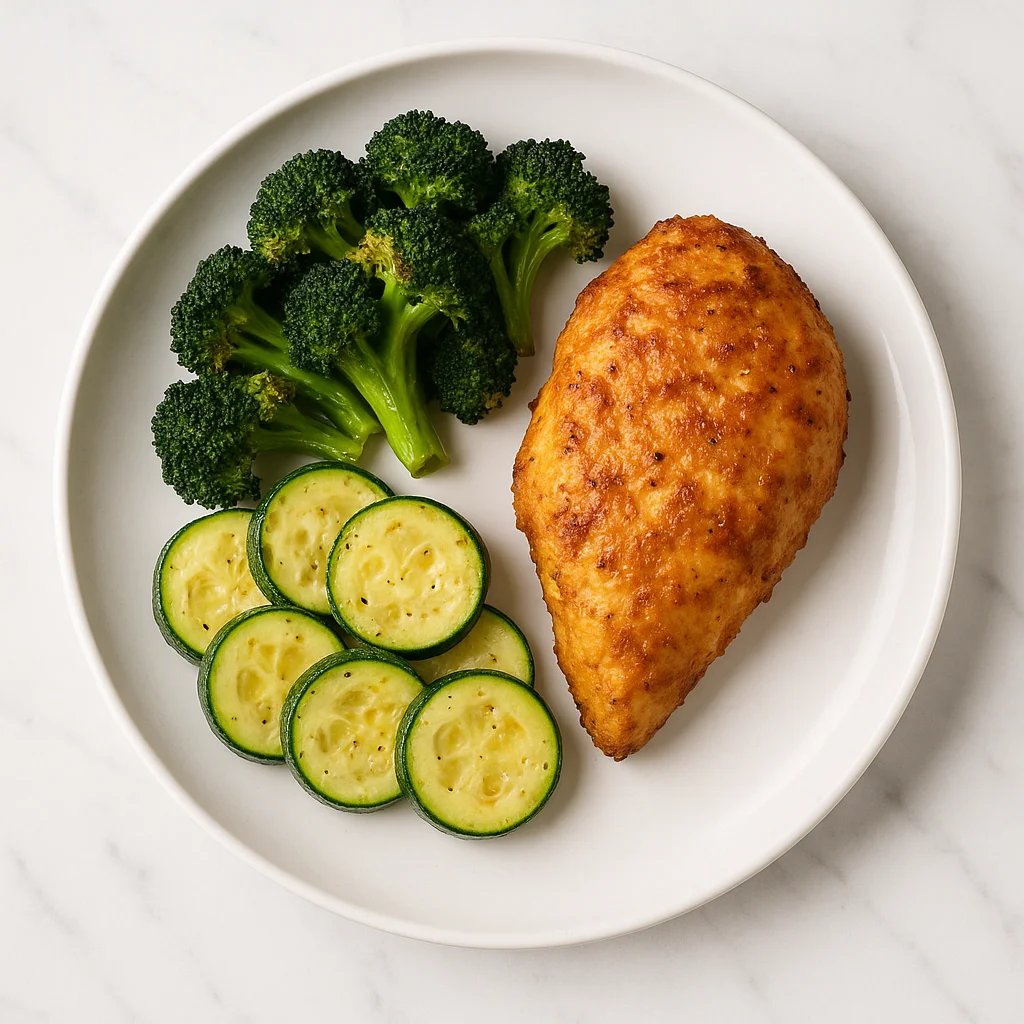
- Air fryer chicken breasts with a paprika garlic rub, plus a simple salad. - Salmon fillet with lemon butter, plus roasted asparagus. - Steak bites with herb butter, plus air roasted broccoli.
For safe cooking, follow USDA minimums. Poultry to 165 degrees Fahrenheit. Fish and shellfish to 145 degrees Fahrenheit. Steaks, chops, and roasts to 145 degrees Fahrenheit and rest 3 minutes. Ground meats to 160 degrees Fahrenheit. Eggs to 160 degrees Fahrenheit or until yolk and white are firm. For more detail, see our [temperature guide](/learn/air-fryer-temperature-guide).
If your unit includes a dehydrator mode, an air fryer dehydrator for very low carb snacks can help during your eating window or on non fasting days. Think fully cooked pepperoni chips, cheddar crisps, or oil tossed zucchini chips. Choose lower sodium options if needed. Do not rely on dehydrating to cook raw meat through. Always cook meat to USDA safe temperatures before any low temperature crisping.
Base blend for 3 pounds mixed proteins: - 1 tablespoon kosher salt, 1 teaspoon black pepper - 2 teaspoons smoked paprika - 1 teaspoon garlic powder, 1 teaspoon onion powder - 2 tablespoons olive oil - Optional. Lemon zest and 1 teaspoon dried oregano
Divide and adapt: - Chicken. Add extra oregano and lemon zest. - Salmon or white fish. Add dill and extra lemon zest. Pat dry before seasoning. - Beef or pork. Add a pinch of chili flakes and a teaspoon of ground cumin.
Safety notes: - Marinate proteins in separate containers. Do not reuse marinade across raw meats. - If you want to brush cooked meat with reserved marinade, set some aside before it touches raw protein.
Cook and store: - Air fryer chicken breasts. Air fry at 375 degrees Fahrenheit until the thickest part reads 165 degrees Fahrenheit, about 12 to 16 minutes depending on thickness. Rest 3 to 5 minutes before slicing. Store in portions for quick salads and bowls. - Salmon. Air fry at 390 degrees Fahrenheit until 145 degrees Fahrenheit in the center, about 7 to 10 minutes depending on thickness. - Steak bites. Air fry at 400 degrees Fahrenheit until the thickest piece reads 145 degrees Fahrenheit, then rest 3 minutes. Toss with butter and herbs.
Try these recipes for guidance and seasoning ideas: - [Garlic Herb Air Fryer Lamb Chop Lollipops](/recipes/garlic-herb-air-fryer-lamb-chop-lollipops) - [Parmesan Crusted Pork Tenderloin Bites with Brussels Sprout Chips](/recipes/parmesan-crusted-pork-tenderloin-bites-with-brussels-sprout-chips) - [Crispy Chili Lime Pork Belly Air Fryer Snack](/recipes/crispy-chili-lime-pork-belly-air-fryer-snack)
Browse more ideas in our [chicken recipes](/recipes/category/poultry) and [seafood recipes](/recipes/category/seafood) collections.
- Erythritol and allulose are not metabolized into glucose for most people. You can usually subtract their grams when estimating net carbs, but still check your own response if you have diabetes. - Other sugar alcohols can raise glucose to varying degrees. As a conservative rule of thumb when a label lists sugar alcohols but does not specify the type, count at least half of those grams toward net carbs. If the label lists maltitol, count most or all of it toward net carbs because it commonly raises glucose. - Read labels carefully. Some products list total sugar alcohols without breaking out the type. When in doubt, estimate more net carbs and verify with your meter or continuous glucose monitor over several uses.
Common examples for vegetables, per 1 cup cooked unless noted. Roasted broccoli has about 6 grams total carbs and 2 grams fiber, about 4 grams net carbs. Roasted asparagus spears have about 5 grams total carbs and 2 grams fiber, about 3 grams net carbs. Sliced zucchini has about 4 grams total carbs and 1 gram fiber, about 3 grams net carbs. Salad greens, 2 cups raw, have about 2 grams total carbs and 1 gram fiber, about 1 gram net carbs.
Keep your first meal of the day lower in net carbs to limit a rapid post meal glucose rise when breaking a fast. For diabetic friendly principles behind our recipes, see [what makes a recipe diabetic friendly](/learn/what-makes-recipe-diabetic-friendly).
If you are new to air frying and want help choosing capacity for batch cooking, start with the basics in our [temperature guide](/learn/air-fryer-temperature-guide) and [beginner's guide](/authority/beginners-guide), then practice with proteins you enjoy.
For a quick refresher on kitchen basics that support this plan, see our [beginner's guide](/authority/beginners-guide) and check your [pantry staples](/authority/pantry-staples) for low carb seasonings and fats. You will be surprised how much easier fasting feels when your first meal is hot, crispy, and ready in minutes.