Category: Equipment & Tips
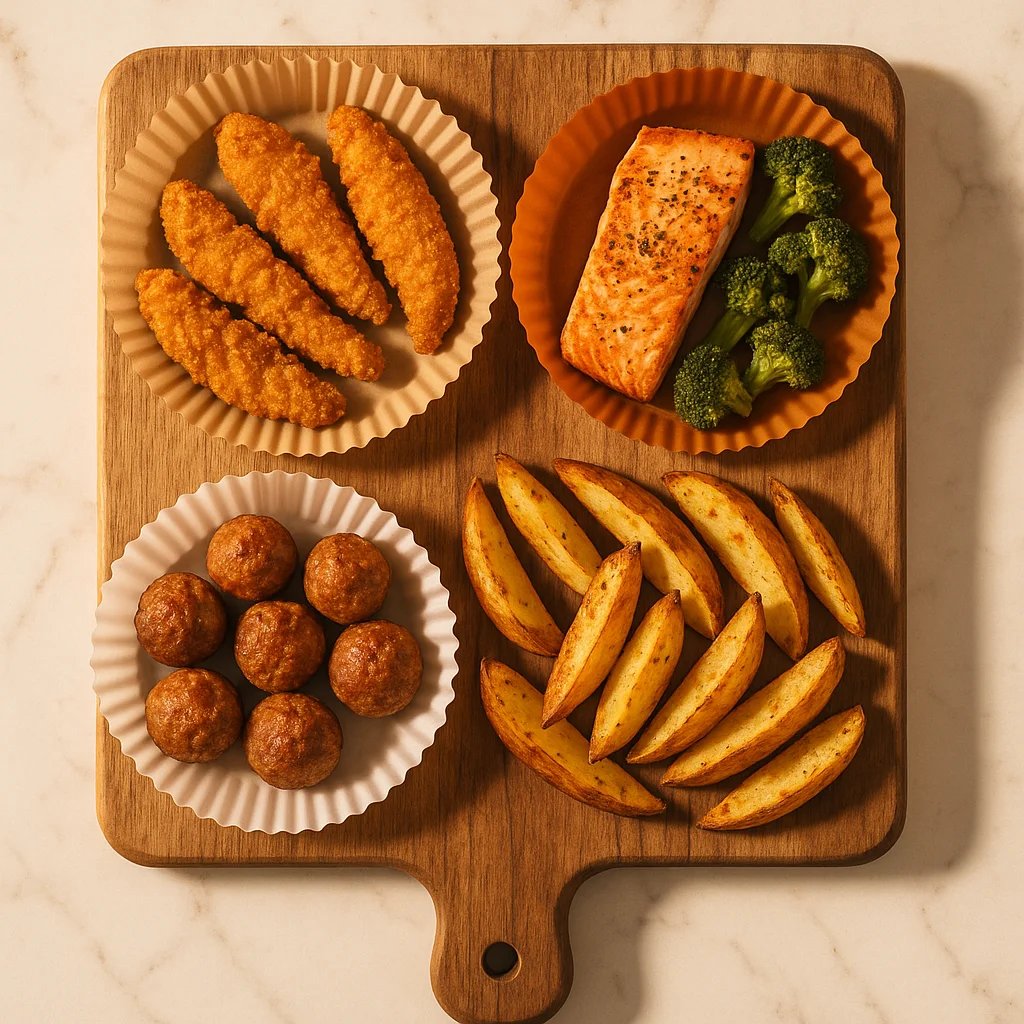
Air fryer liners save cleanup time, but using them wrong can turn crispy food into soggy food. Here is how to choose and position air fryer nonstick liners and silicone liners for high protein air fryer meals so you get golden results every time.
The whole point of an air fryer is rapid hot air circulation around food. Any barrier that blocks airflow reduces crispiness. That is why choosing the right liner and positioning it correctly matters more than most people realize.
The two main liner types, disposable parchment and reusable silicone, both work well when used properly. The problems start when cooks use solid (non-perforated) liners, oversize them, or load them incorrectly.
Disposable air fryer nonstick liners with pre-cut perforations are the simplest option. They come in sizes matched to common basket diameters and have holes punched in a pattern that allows air through. For most keto cooking, they perform well with proteins like chicken thighs, pork chops, and fish fillets.
Silicone liners for high protein air fryer meals are the reusable alternative. They have raised nubs or ridges on the bottom that elevate food slightly, creating air channels underneath. This design actually improves crispiness compared to bare basket cooking in some cases, because the channels trap rendered fat away from the food surface.
Rule one: never let the liner extend above the food line. If parchment paper curls up and touches the heating element, it can scorch or catch fire. Trim oversized liners so they sit flat in the basket with no overhang.
Rule two: always preheat before placing the liner. A cold liner in a cold air fryer can get blown around by the fan before food weighs it down. Preheat for 3 minutes, then place the liner and food together.
Rule three: do not stack liners. Two layers of parchment or a parchment liner on top of a silicone liner blocks too much airflow. One layer is enough.
Some foods do not benefit from liners. Anything that needs maximum direct contact with basket heat, like steak or thick cut pork chops, does better directly on the basket or on a [grill plate for high protein air fryer meals](/learn/air-fryer-accessories-essential-kit). The direct metal contact creates better sear marks and browning.
Vegetables that release moisture, like zucchini or mushrooms, can also cook better without liners. The moisture needs to drip away from the food, and a liner can trap it, creating steam instead of dry heat.
We ran side by side tests with [Sesame Garlic Air Fryer Shrimp](/recipes/sesame-garlic-air-fryer-shrimp-with-crisp-broccoli) and [Air Fryer Garlic Parmesan Shrimp Zucchini Bites](/recipes/air-fryer-garlic-parmesan-shrimp-zucchini-bites) using both liner types versus bare basket cooking. The perforated parchment liners produced nearly identical crispiness to bare basket, with significantly easier cleanup. Silicone liners with raised ridges actually produced slightly crispier bottoms on the shrimp, likely because rendered fat drained into the channels rather than sitting under the food.
The takeaway: liners do not hurt crispiness when you choose perforated options and follow the placement rules above. For most keto and low carb air fryer cooking, they are worth using. For more on choosing the right accessories, see our [essential accessories kit guide](/learn/air-fryer-accessories-essential-kit) and our review of [which accessories are worth buying](/learn/air-fryer-accessories-worth-it).