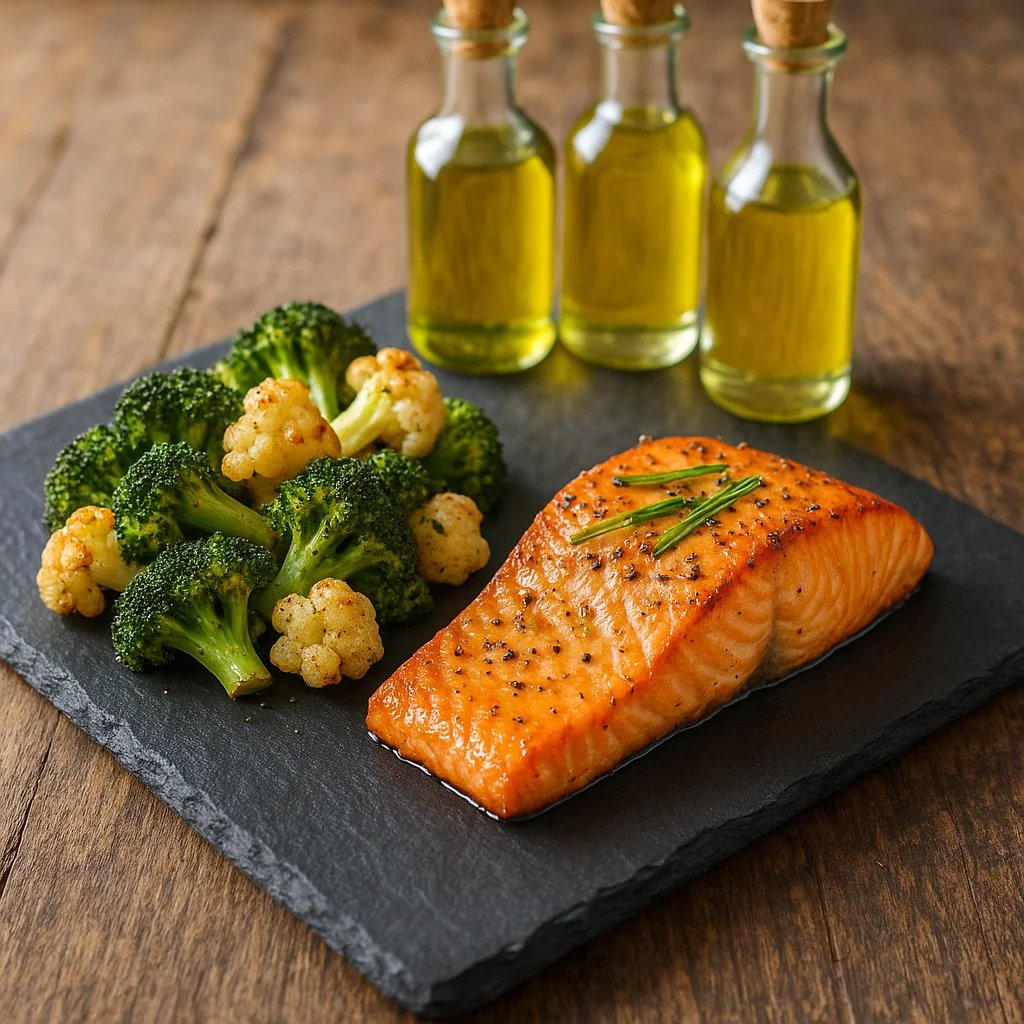
Category: Nutrition
Choosing the right oil can boost heart health, flavor, and blood sugar control in your air fryer meals. Learn which oils fit diabetic-friendly cooking, how to use less oil without losing crispness, and simple ways to add big taste to low-carb proteins and vegetables.
Quick guide: - Favor oils rich in monounsaturated fats for everyday cooking. - Use oils with higher smoke points for higher air fryer settings. - Keep portions modest. A little oil goes a long way in an air fryer.
If you want a refresher on how food choices move your glucose numbers, our [blood sugar control guide](/authority/blood-sugar-control) lays out the basics in a clear, practical way.
- Extra virgin olive oil: Heart-healthy and flavorful. Smoke point can range roughly from 375 to 410 degrees Fahrenheit, so it is fine for medium to medium-high air fryer settings. Great for vegetables and finishing cooked proteins with a drizzle. - Light or refined olive oil: Similar heart benefits, with a higher smoke point, often around 450 degrees Fahrenheit. Good for higher heat crisping. - Avocado oil: Rich in monounsaturated fats with a very high smoke point, often quoted near 500 degrees Fahrenheit. Useful for high heat crisping and pre-oiling the basket. - Canola oil: Neutral flavor, a mix of mono and polyunsaturated fats, and a smoke point often around 400 degrees Fahrenheit. A practical everyday option for marinades and light spray. - Peanut oil: Higher smoke point, commonly used for crisping. Provides a pleasant flavor for proteins and vegetables. Avoid if anyone has a peanut allergy.
Use coconut oil and butter sparingly. They are primarily saturated fats, which can raise LDL cholesterol. If you love the flavor, reserve them for occasional use and keep portions small.
- Vegetables: 1 teaspoon per pound is often enough to help seasonings stick and encourage browning. - Protein rubs: 1 teaspoon per 8 ounces helps spices adhere and promotes even color. - Basket prep: Lightly brush or wipe the basket with a high smoke point oil to reduce sticking, especially with lean proteins.
A pump mister or a small pastry brush helps you distribute oil evenly without overdoing it. Toss foods in a bowl to coat. That single step saves oil and improves coverage compared to pouring directly.
- Olive oil plus lemon juice, garlic, and parsley brightens chicken and seafood. - Avocado oil plus smoked paprika and cumin makes crisp, savory cauliflower. - Canola oil with rice vinegar, ginger, and scallions gives you a light, aromatic finish on fish.
Let the mixture sit on the food for 10 to 15 minutes before cooking so flavors penetrate.
- Poultry must reach 165 degrees Fahrenheit. - Fish and shellfish must reach 145 degrees Fahrenheit. - Ground meats must reach 160 degrees Fahrenheit. - Beef, lamb, and pork steaks or chops should reach 145 degrees Fahrenheit, then rest for 3 minutes before serving.
Choose the oil that matches your heat level. For example, use avocado or refined olive oil if you plan to crisp chicken skin at higher temperatures. If you are roasting vegetables at 375 or 390 degrees Fahrenheit, extra virgin olive oil works beautifully and adds depth.
- Chicken: Toss skin-on thighs or boneless breasts with 1 teaspoon refined olive oil, smoked paprika, garlic powder, and salt. Air fry until the chicken reaches 165 degrees Fahrenheit. Try it with our [Air Fryer Mexican Chorizo Jalapeño Egg Muffins](/recipes/air-fryer-mexican-chorizo-jalapeo-egg-muffins). For a lighter option, use skinless breasts and finish with a drizzle of extra virgin olive oil for flavor. - Seafood: Salmon fillets brushed with avocado oil and lemon pepper hold up well at higher heat. Cook until the fish reaches 145 degrees Fahrenheit. See the method in [Air Fryer Garlic Butter Shrimp with Lemon and Parsley](/recipes/air-fryer-garlic-butter-shrimp-with-lemon-and-parsley). White fish like cod also does well with olive oil and herbs. - Vegetables: Cauliflower, broccoli, and zucchini crisp nicely with a teaspoon of olive oil and bold spices. Try [Spicy Cauliflower Bites](/recipes/spicy-cauliflower-bites) for a quick side that will not spike your carbs. - Turkey meatballs: Use a small amount of canola or refined olive oil on the basket to prevent sticking. Air fry until the internal temperature reaches 160 degrees Fahrenheit. - Pork chops: A light brush of avocado oil helps you get a golden crust. Cook to 145 degrees Fahrenheit and rest for 3 minutes before serving to keep them juicy.
For more inspiration by protein, browse our [chicken recipes](/categories/chicken) and [seafood recipes](/categories/seafood). Each recipe notes safe internal temperatures.
- Measure your oil with a teaspoon, not a pour. It is easy to add more, harder to take it away. - Keep the focus on protein and fiber. Low-carb vegetables and lean proteins should anchor the plate. - Use finishing oils for flavor, not volume. A half teaspoon of extra virgin olive oil drizzled after cooking can taste richer than a full teaspoon used before.
- Lemon herb olive oil: 2 teaspoons extra virgin olive oil, 1 tablespoon lemon juice, 1 teaspoon minced garlic, 1 teaspoon chopped parsley, 1 pinch salt. Toss with fish or chicken and marinate 10 minutes. - Smoky avocado oil rub: 2 teaspoons avocado oil, 1 teaspoon smoked paprika, 1 teaspoon ground cumin, 1 pinch salt. Rub on cauliflower or zucchini. - Ginger scallion canola glaze: 2 teaspoons canola oil, 1 tablespoon rice vinegar, 1 tablespoon chopped scallions, 1 teaspoon grated ginger, 1 pinch salt. Brush on white fish.
Cook smart, season boldly, and enjoy food that loves your heart back.